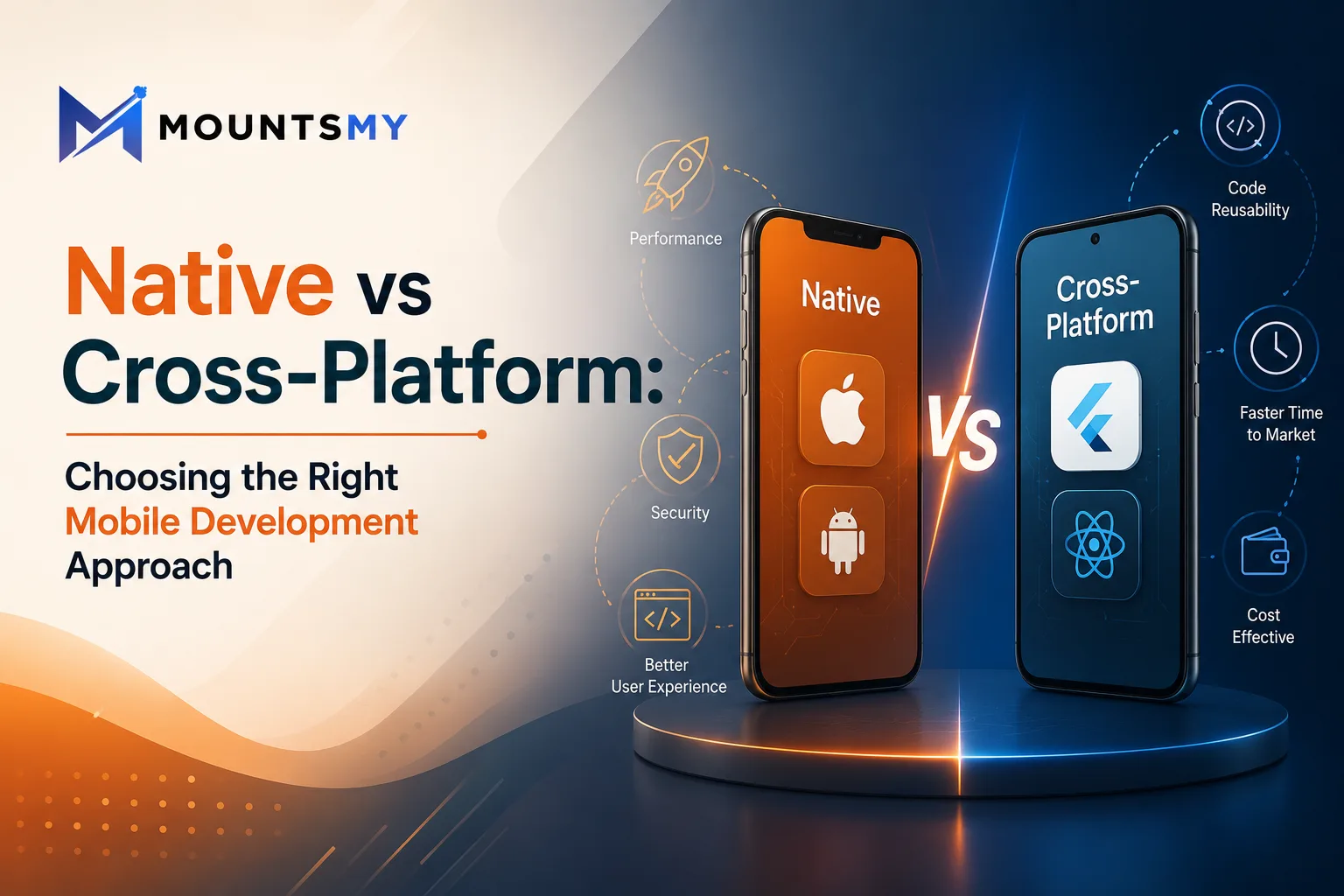
What "cross-platform" actually buys you
Flutter and React Native let you write one codebase that ships to both iOS and Android, typically cutting development time and cost by 30–40% compared to building two native apps in parallel. For most business apps — content, forms, standard navigation, API-driven data — the performance difference versus native is imperceptible to users. This is why the majority of startup MVPs and mid-complexity business apps ship cross-platform today.
When native still wins
Native development earns its higher cost when the app depends on:
- Heavy graphics or animation. Games, AR/VR, and camera-intensive apps benefit from direct access to platform rendering pipelines.
- Deep hardware integration. Bluetooth peripherals, background location tracking, or custom biometric flows are more reliable when built directly against each platform's native APIs.
- Day-one access to new OS features. Cross-platform frameworks typically lag weeks to months behind when Apple or Google ship new platform capabilities.
- Extremely long-lived, high-scale consumer apps. At the scale of a banking or social app with tens of millions of users, the incremental performance and maintainability gains of native can outweigh the duplicated engineering cost.
Flutter vs React Native: the practical differences
Both are production-ready and widely used. The differences that actually matter for a project decision:
- Flutter renders its own UI layer (not native widgets), which gives more consistent pixel-perfect design across both platforms — useful for design-heavy consumer apps. Dart, its language, has a smaller hiring pool than JavaScript/TypeScript.
- React Native uses native UI components under the hood and shares more code patterns with web React, which matters if your team already has React engineers or you're building alongside a React web app.
Ask: does any single screen in this app need functionality a cross-platform bridge can't reasonably provide? If the honest answer is no for 90% of the app, cross-platform is very likely the right call — even for apps that will eventually scale significantly.
The hybrid path: cross-platform core, native modules where needed
Both Flutter and React Native support native modules — small pieces of platform-specific code that plug into an otherwise shared codebase. This lets teams ship 90%+ of the app cross-platform and drop into native code only for the specific screen or feature that genuinely needs it, rather than choosing one approach for the entire app.
Budget and timeline reality check
As a rough guide: a cross-platform MVP with standard screens (auth, feed, profile, settings, payments) typically ships in 8–14 weeks. The same scope built natively for both platforms in parallel usually takes 40–60% longer and requires two specialized engineering tracks instead of one. For most first products, that time-to-market difference is the deciding factor — you can always migrate performance-critical screens to native later, once you know which ones actually need it.
What we recommend by project type
- MVP / early-stage startup: Cross-platform (Flutter or React Native) — validate the product before investing in platform-specific engineering.
- B2B / internal business app: Cross-platform — the UI complexity rarely justifies native's added cost.
- Consumer app with heavy media, AR, or gaming elements: Native, or a hybrid with native modules for the demanding screens.
- Mature app scaling past millions of users: Evaluate native for the highest-traffic, most performance-sensitive screens while keeping the rest cross-platform.
The bottom line
Cross-platform is the right default for most apps built today — faster, cheaper, and good enough for the vast majority of screens. Native earns its cost when a specific, identifiable piece of functionality genuinely needs it. Start by listing what your app must do, not what framework sounds more impressive, and the right choice usually becomes obvious.